

Introduction
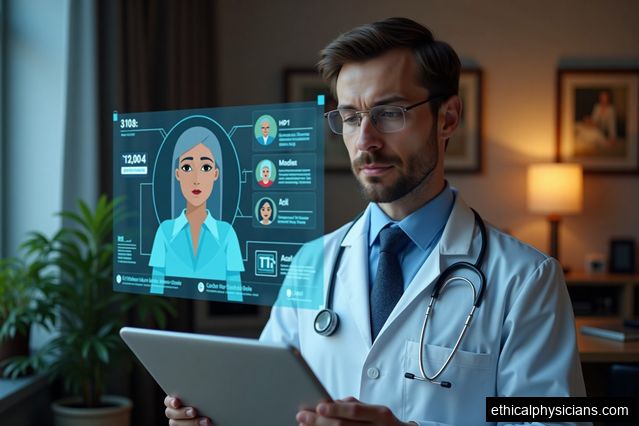
In this rapidly evolving technological era, telemedicine stands as a beacon of progress in healthcare delivery, promising unprecedented accessibility. However, like all innovations, it raises significant ethical questions that must be addressed. As we navigate the digitalization of healthcare, we must balance the benefits of accessibility against the need for personalized care.
In this blog, we'll dive into the ethics of telemedicine, exploring its potential challenges and benefits, using real-world examples and expert opinions. We will unravel the complexity of telemedicine's ethical framework, its implications for patient care, and how it can be refined and improved.
As we delve deeper into the realm of telemedicine introduced earlier, it becomes evident that the landscape of healthcare is undergoing a remarkable transformation. The concept of virtual consultations, remote monitoring, and digital health records is reshaping how patients access and receive medical care. Imagine a scenario where a patient living in a rural area can connect with a specialist located in a different city without the constraints of physical distance. This extraordinary advancement not only improves healthcare accessibility but also enhances the overall patient experience.
Balancing Accessibility
Telemedicine has revolutionized accessibility in healthcare. It breaks down geographical barriers and extends services to remote areas. A study by the American Medical Association found that 75% of all visits, consultations, and follow-ups could be done virtually, eliminating the need for physical travel. This is especially beneficial for rural communities, such as those in Alaska, where telemedicine has been instrumental in providing care to isolated populations.
However, as we revel in this newfound accessibility, we must remember that not all patients have access to the necessary technology. The digital divide can exacerbate social health inequalities, leaving the most vulnerable populations behind. In a world where 3.6 billion people still don't have access to the internet, it's clear that telemedicine's promise of universal accessibility is far from fulfilled.
When discussing balancing accessibility, it's crucial to consider the intersection of technology and physical spaces. For example, smart buildings equipped with Io T sensors can enhance accessibility by automatically adjusting lighting, temperature, and doorways to accommodate individuals with varying needs. This seamless integration of technology not only promotes inclusivity but also demonstrates how innovation can be harnessed to create more accessible environments.
Furthermore, in the realm of education, the concept of Universal Design for Learning (UDL) plays a pivotal role in balancing accessibility. By providing multiple means of representation, engagement, and expression, educators can cater to diverse learning styles and abilities, ensuring that all students have equal opportunities to thrive academically. Implementing UDL strategies fosters an inclusive learning environment that empowers students to reach their full potential regardless of their individual needs.
Personalized Care in Telemedicine
While telemedicine provides convenience, it also raises questions about the quality of care. Can healthcare providers deliver the same level of personalized care through a screen? A study by the Journal of Medical Internet Research found mixed results. Some patients felt their virtual visits lacked the personal touch of in-person consultations, while others found them satisfactory.
A case study from Mayo Clinic showed that telemedicine could be successfully used for personalized care in critical situations. A patient with COVID-19 was remotely monitored using telemedicine technologies, and the care team was able to personalize his treatment plan and provide constant care without direct physical contact. This shows that with the right implementation, telemedicine can offer personalized care.
Personalized care in telemedicine is revolutionizing healthcare delivery by tailoring treatment plans to individual patients' needs. Through advanced technologies, healthcare providers can now gather detailed patient data remotely, allowing for more accurate diagnoses and personalized treatment recommendations. For instance, telemedicine platforms can utilize AI algorithms to analyze a patient's medical history, lifestyle habits, and genetic predispositions to create customized care plans. This level of personalized care fosters a deeper patient-provider relationship and enhances treatment outcomes. Patients benefit from individualized attention and proactive interventions, leading to improved health management and overall well-being in the realm of telemedicine.
Ethical Considerations
Telemedicine brings forth new ethical challenges. Data privacy and security, for instance, are of utmost importance. With medical records becoming digital, there's an increased risk of breaches. Health Insurance Portability and Accountability Act (HIPAA) compliance is crucial to protect patient data.
Furthermore, the lack of physical examination could potentially lead to misdiagnoses. In a survey by the American Medical Association, 84% of doctors expressed concern about the potential for missed diagnoses with telemedicine. Thus, while telemedicine has benefits, it must be implemented responsibly to uphold ethical standards in healthcare.
In the realm of telemedicine, another critical ethical consideration revolves around informed consent. With virtual consultations, ensuring patients fully comprehend the risks and benefits of treatment becomes more complex. Moreover, issues of digital literacy may arise, affecting patients' ability to make informed decisions about their care. For instance, some patients might struggle to navigate online platforms or understand medical jargon presented during virtual appointments. Healthcare providers must address these challenges by implementing clear communication strategies and utilizing plain language to empower patients in making well-informed choices regarding their health.
Conclusion
Telemedicine holds immense potential for transforming healthcare delivery, making it more accessible than ever before. However, it also presents new ethical concerns that need to be addressed. From accessibility to personalized care, and from data privacy to the potential for misdiagnoses, the ethical landscape of telemedicine is nuanced and complex.
As we continue to embrace telemedicine, we must strive for a balance. We must ensure that in our pursuit of accessibility, we don't compromise on personalized care and uphold ethical standards. By doing so, we can ensure that telemedicine serves as a tool for equitable and quality healthcare for all.
In conclusion, the future of telemedicine appears promising, especially in addressing healthcare disparities. By bridging the gap between rural communities and specialized medical services, telemedicine offers a solution to the challenges of accessibility and affordability. Imagine a scenario where a patient living in a remote area can receive expert medical advice without the need to travel long distances or incur high costs. This not only enhances patient outcomes but also reduces the burden on healthcare infrastructure. With the advancement of technology and the growing acceptance of virtual consultations, telemedicine is poised to revolutionize the way healthcare is delivered, ensuring that quality care reaches every corner of the globe.